

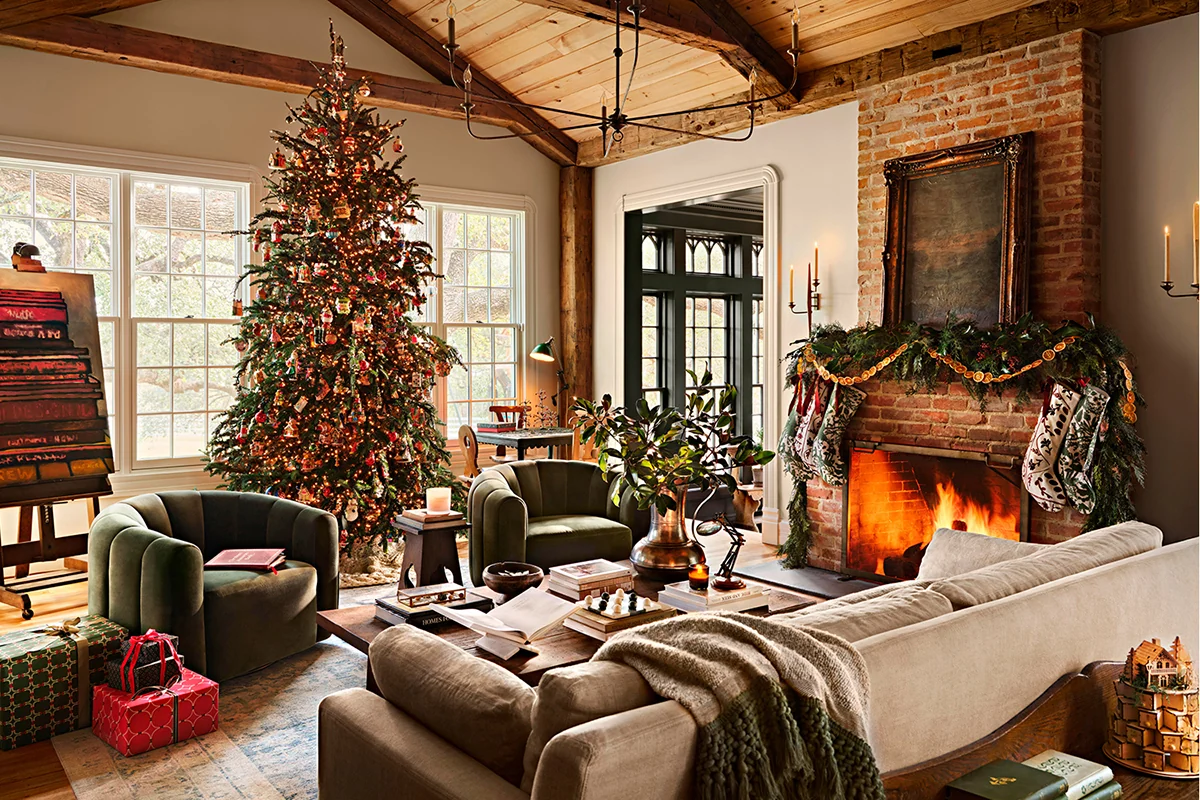
Meaningful Christmas decorating starts with deciding what you want your home to express during the season. A few well-chosen pieces can create warmth, tell a family story, and make daily routines feel more festive. You do not need to decorate every room or replace last year’s collection to achieve a satisfying result.
Begin With What You Already Own
Unpack your Christmas decorations before buying anything new and give yourself time to look through them. Separate pieces you love from those you keep only because they have always been in the box. This makes it easier to recognize what belongs in your home now and where a new purchase might serve a purpose.
Choose a loose theme based on your existing collection rather than trying to copy an entire photographed room. You might work with natural colors, traditional red accents, or a mixture of family ornaments. A flexible theme provides visual connection while leaving space for objects with personal meaning.
If you want one central piece, consider a Nativity scene that you can display and enjoy each year. Holyart offers Nativity figures, settings, and Christmas decorations in different styles, allowing you to compare options for your space and style. Check the dimensions and product details carefully so that a new addition complements what you already own.
Give Each Display a Clear Purpose
Choose a few places where decorations will make the greatest difference to daily life. An entryway can welcome visitors, a dining table can support shared meals, and a shelf can hold a meaningful focal point. Concentrating on these areas often creates a more coherent result than distributing small objects across every available surface.
Consider how each space needs to function throughout December. A table arrangement should leave room for eating, and an entryway display should allow people to put down bags and remove coats. Decorations are easier to enjoy when they work with the household’s routines.
Leave some areas undecorated to give your chosen pieces visual space. A Nativity scene, special wreath, or favorite ornament can be easier to appreciate when it is not surrounded by competing objects. Step back occasionally and remove anything that makes the arrangement feel crowded.
Use Family History as Design Inspiration
Decorating can offer an opportunity to share stories that might otherwise remain unspoken. Ask relatives about ornaments they remember, materials they used, or traditions they enjoyed when they were younger. You may discover that a modest object has a history more interesting than its appearance suggests.
Give these pieces a place where they can be noticed rather than hiding them within a larger display. Pair a handmade ornament with a small photograph or write its story on a tag kept inside the storage box. These details help younger family members understand why the object matters.
You can also create new pieces that document the present year. A simple paper ornament, a dated family photograph, or a decoration made during a shared afternoon can become part of the collection. Focus on the experience of making it rather than expecting a professional finish.
Make Selective Purchases
Before buying a decoration, decide where it will go and how you will store it. Consider whether it adds something missing or repeats a role already filled by several pieces. This pause can make shopping more deliberate and reduce purchases that feel unnecessary once you get home.
Look for clear information about materials, dimensions, care, and construction. An appealing photograph does not always reveal whether an item is suitable for the way you plan to use it. Choose pieces you expect to enjoy repeatedly and can realistically maintain.
Set a decorating budget that includes any supplies needed to use your existing collection. Storage materials, replacement hooks, or a simple repair may offer more value than another decorative object. A thoughtful Christmas home can develop through care as well as acquisition.
Create Traditions Around the Decorating Process
Turn decorating into an occasion that people can join at their own pace. Prepare a simple meal, play familiar music, and let each person choose a piece to place. Giving everyone a role can make the process feel shared without requiring identical tastes.
Avoid trying to complete the entire house in one demanding session. You might arrange the main display one weekend and decorate the tree on another evening. Spreading the process out creates several moments to enjoy and allows time to reconsider what works.
Take a few photographs once the arrangements are complete. They can help you remember placements you liked and make next year’s setup easier. Add a note about anything that was awkward, overcrowded, or especially successful while the experience is fresh.
Store Decorations With Next Christmas in Mind
When the season ends, group pieces according to where you use them or how fragile they are. Label containers clearly and keep small components with the objects they belong to. A little organization makes it easier to begin next year without searching through every box.
Use packing materials appropriate to each decoration and follow any available care guidance. Keep a simple inventory of larger or easily forgotten items. This helps you see what you own before shopping begins again.
Conclusion
Meaningful Christmas decorating combines personal history, practical choices, and room for shared experiences. Begin with your existing collection, select a few focal points, and add new pieces with a clear purpose. A welcoming home grows from the attention you give its people and traditions as much as from the decorations themselves.
Comments are closed.