

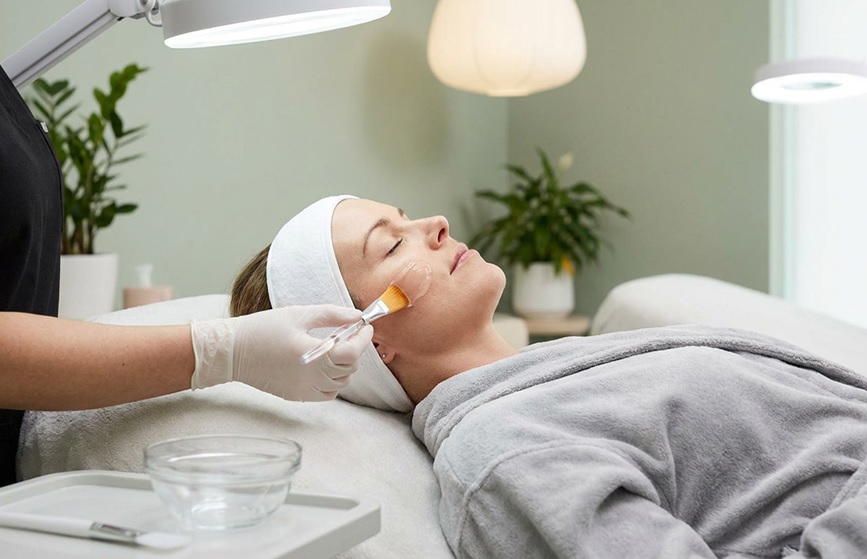
Chemical peels fall into three depths: superficial (glycolic or salicylic acid) for mild texture and tone, medium (TCA) for acne scarring and sun damage, and deep (phenol) for significant wrinkles and skin damage. Each depth treats different concerns and has different downtime, ranging from no recovery time to several weeks. Choosing the right one depends on your skin, your goals, and a professional evaluation.
If you have spent any time researching skincare, you have probably noticed that “chemical peel” gets used as a catchall term for treatments that are actually quite different from one another. Patients in Newport Beach considering chemical peels often arrive at their first consultation unsure whether they need a gentle glycolic refresh or something stronger to address acne scarring or years of sun exposure. Understanding the differences between superficial, medium, and deep peels is the first step toward choosing a treatment that actually matches your skin concern.
What Are Chemical Peels and How Do They Work?
A chemical peel uses a controlled acid solution to remove damaged outer layers of skin, encouraging smoother, more even-toned skin to grow in its place. The peel’s depth and acid type determine how deeply it penetrates and which concerns it can address. Peels are generally grouped into three categories: superficial, medium, and deep.
According to the American Society of Plastic Surgeons, peel strength is chosen based on the specific skin issue being treated, not simply how dramatic a result a patient wants. A peel that is too aggressive for a patient’s skin type or goals can cause more irritation than benefit, which is why a proper evaluation matters before any treatment begins.
Superficial Peels: Glycolic and Salicylic Acid for Everyday Skin Concerns
Superficial peels use mild acids like glycolic acid or salicylic acid to exfoliate only the outermost layer of skin, making them a particularly suitable fit for dullness, mild unevenness, and light acne breakouts. They typically involve little to no visible peeling and patients often return to normal activities the same day.
Glycolic acid is an alpha hydroxy acid that works on the surface of the skin, and it is commonly used for general exfoliation, mild texture concerns, and light brightening, according to information published by the American Society of Plastic Surgeons. Salicylic acid, on the other hand, is oil-soluble, which allows it to get inside clogged pores in a way glycolic acid cannot. That makes salicylic peels a frequent choice for patients dealing with active acne or oily skin.
Superficial peels are usually done in a series rather than as a single treatment. Most patients see gradual improvement in tone and texture over several sessions rather than one dramatic change, which fits the honest, no-guarantee approach patients should expect from any reputable provider.
Medium Peels: TCA for Acne Scarring and Sun Damage
A medium-depth peel, most often using trichloroacetic acid (TCA), penetrates into the upper dermis to treat acne scars, deeper wrinkles, and uneven pigmentation that superficial peels cannot reach. Recovery typically involves several days of redness and visible peeling before smoother skin appears.
TCA is considered the workhorse acid for medium-depth peeling because it works differently than glycolic or salicylic acid. Instead of exfoliating gradually, it denatures proteins in the skin to trigger a controlled regeneration process, which is why the American Society of Plastic Surgeons notes it is frequently used alongside Jessner’s solution for patients with acne scarring, sun damage, and blotchy pigmentation.
The right depth of peel depends on the concern, not on how strong a treatment sounds.
Patients considering a medium peel for acne scarring often ask how it compares to other skin resurfacing options. For some patients, a provider may recommend combining a TCA peel with CO2 laser skin resurfacing or spacing the two treatments out, depending on the severity of scarring and the patient’s downtime tolerance.
Deep Peels: Phenol for Dramatic, Long-Lasting Results
Deep chemical peels use phenol, the strongest peeling agent, to reach the lower dermis and address significant sun damage, deep wrinkles, and more severe textural irregularities. Because of the depth of penetration, deep peels require the longest recovery, typically two to three weeks of downtime, and are usually performed once rather than repeated.
The American Society of Plastic Surgeons notes that a single deep peel can produce results that last for years, which sets it apart from superficial and medium peels that are typically repeated over time. Because phenol peels are more intensive, candidates are carefully screened for skin type, medical history, and realistic expectations before treatment.
Deep peels are not appropriate for every patient or every concern. Skin laxity, sagging, or more advanced volume loss generally will not improve with a chemical peel of any depth and may be better addressed through a surgical consultation instead.
How to Choose the Right Peel for Your Skin Concern
Choosing the right peel starts with identifying your primary concern rather than picking a peel strength first. Patients dealing with occasional dullness or mild acne often do well with superficial peels, while those with established acne scarring or noticeable sun damage tend to need medium-depth treatment to see meaningful change. Deep peels are generally reserved for patients with more significant photoaging who want a longer-lasting result and can accommodate real downtime.
A few factors that typically guide this decision include:
- Skin concern severity: Mild texture issues respond to superficial peels; established scarring or pigmentation usually needs medium depth.
- Downtime tolerance: Superficial peels fit into a lunch break, while medium and deep peels require planned recovery time.
- Skin type and tone: Some peels carry a higher risk of post-treatment pigmentation changes in certain skin types, which is a key part of the evaluation.
- Treatment history: Patients who have had laser treatments, retinoid use, or prior peels may need a different starting point.
Because peel selection depends on so many individual factors, a hands-on evaluation is far more reliable than trying to self-diagnose the right treatment from general descriptions online.
What to Expect: Downtime and Recovery by Peel Type
Downtime after a chemical peel ranges from none at all to several weeks, depending on the depth of the treatment. Superficial peels generally involve mild flaking for a day or two, medium peels involve several days of redness and more visible peeling, and deep peels require the longest recovery period with skin that stays pink for weeks as it heals.
Regardless of peel depth, sun protection is one of the most important parts of aftercare. The American Academy of Dermatology advises against tanning beds and other indoor tanning after a peel since healing skin is more vulnerable to damage and recommends daily sunscreen once the skin has healed to help protect results. The Aesthetic Society similarly emphasizes gentle skincare and avoiding picking at peeling skin, since disrupting the healing process can increase the risk of irritation or uneven results.
Why Choose The One Plastic Surgery Center for Chemical Peels in Newport Beach
At The One Plastic Surgery Center, board-certified plastic surgeon Dr. Siamak Agha oversees skin treatments, including chemical peels. That medical backing matters for a treatment where the wrong depth or acid choice for a given skin type can lead to complications like uneven pigmentation, particularly for patients considering medium or deep peels.
For patients who are also curious about how chemical peels compare to injectables or other non-surgical treatments, exploring options like Botox alongside peels can sometimes address different signs of aging in combination. A consultation is the best way to sort out which approach, or combination of approaches, actually fits your skin and goals.
Results and Candidacy Vary by Patient
Results from any chemical peel vary from patient to patient based on skin type, the severity of the concern being treated, and how closely aftercare instructions are followed. No outcome can be guaranteed, and a consultation is required to determine which peel depth, if any, is appropriate for your skin.
Ready to find out if chemical peels are right for you? Schedule a consultation with board-certified plastic surgeon Dr. Siamak Agha at The One Plastic Surgery Center in Newport Beach to discuss your skin goals and options.
Frequently Asked Questions
What is the difference between a superficial, medium, and deep chemical peel? Superficial peels use mild acids like glycolic or salicylic acid to exfoliate the outer skin layer with little downtime. Medium peels use TCA to reach the upper dermis for acne scarring and sun damage, and deep peels use phenol to reach the lower dermis for significant wrinkles and photoaging, with the longest recovery time.
Which chemical peel is best for acne scarring? Medium-depth TCA peels are generally more effective for established acne scarring than superficial peels, since they reach deeper into the skin. The right choice still depends on the type and severity of the scarring, which is best evaluated in person.
How much downtime should I expect after a chemical peel? Downtime ranges from essentially none after a superficial peel to several days of visible peeling after a medium peel and two to three weeks after a deep phenol peel. Your provider can give you a more specific timeline based on the peel selected for your skin.
Can chemical peels treat sun damage and fine lines? Yes, medium and deep peels are commonly used to address sun damage, uneven pigmentation, and fine lines, while superficial peels offer more subtle improvement in tone and texture. Deeper peels tend to produce longer-lasting results but require more recovery time.
Are chemical peels safe for all skin types? Not every peel is appropriate for every skin type, since some acids carry a higher risk of pigmentation changes in certain patients. This is why candidacy should always be assessed by a qualified provider before choosing a peel depth or acid type.
Comments are closed.