

Most people understand why blood donation is important, but plasma often flies under the radar. It is not something you see on posters or hear about in everyday conversation. Still, hospitals and clinics depend on plasma based therapies every single day to treat serious and chronic conditions.
Plasma is the liquid part of your blood, the pale gold fluid that carries proteins, hormones, and antibodies throughout your body. It helps regulate clotting, supports your immune system, and transports nutrients where they need to go. When donated, it becomes the foundation for medications used by people with immune disorders, bleeding conditions, burns, and other complex health challenges.
What makes plasma donation especially meaningful is that it directly supports treatments that cannot be fully manufactured in a lab. Unlike many medications, these therapies require human plasma to exist at all. That means real people, sitting in real chairs, choosing to give an hour or two of their time.
For donors, it can feel surprisingly simple. For patients, it can mean stability, comfort, or even survival. That contrast is what makes the process so powerful.
Understanding What Plasma Is and Why It Is Needed
To understand how to donate plasma, it helps to first understand what plasma actually does. If red blood cells are the delivery trucks, plasma is the highway system they travel on. It carries proteins that help blood clot, antibodies that fight infection, and nutrients that keep organs functioning.
Doctors use donated plasma to create specialized therapies. These might include clotting factor concentrates for people with bleeding disorders or immune globulin treatments for those with weakened immune systems. In emergency settings, plasma can also help trauma patients maintain blood volume and stabilize faster.
Demand for these products continues to grow each year. As medical science advances, more conditions can be treated with plasma derived therapies. That progress is encouraging, but it also means the need for donors never really slows down.
Because plasma has a limited shelf life, centers cannot just stockpile it forever. Donations need to be steady and ongoing. That is why regular donors play such a critical role in keeping the system running smoothly.
How plasma donation differs from blood donation
Many first timers assume plasma donation is exactly like giving blood. While the beginning looks similar, the process itself is a bit different. Instead of collecting whole blood and storing it as is, plasma donation separates the plasma and returns the rest to your body.
This process is called plasmapheresis. Blood flows from your arm into a machine that spins and separates the plasma. Red cells and other components are then returned to you along with a small amount of saline.
Because you get those red cells back, your body recovers more quickly. That is one reason donors can give plasma more often than whole blood. It is a more frequent, repeatable way to contribute.
Who Can Donate and What Requirements to Expect
One of the most common questions people have is whether they qualify. The good news is that many healthy adults do. Plasma centers have basic eligibility criteria to protect both donors and recipients.
Typically, you must meet minimum age and weight requirements. You also need to pass a health screening that includes checking your temperature, blood pressure, and protein levels. These steps help ensure that donating is safe for you and that your plasma is safe for others.
Medical history matters too. Certain medications or recent illnesses may mean you need to wait before donating. Staff members will walk you through a questionnaire that covers travel, surgeries, and other factors that could affect eligibility.
The screening might feel thorough, but it is there for a reason. These safeguards help build trust in the entire system. When patients receive plasma based treatments, they need to know that everything has been carefully checked.
Common myths that stop people from donating
Some people hesitate because they think donating will make them weak or sick. For most healthy donors, that simply is not true. Your body replaces plasma quickly, often within a day or two.
Others worry about needles or complicated equipment. While there is a needle involved, the setup is similar to a standard blood draw. Staff members are trained to make the experience as comfortable as possible.
There is also a belief that only certain types of people are eligible. In reality, donors come from all walks of life. If you are generally healthy, you might qualify more easily than you expect.
Step by Step: What Happens During a Donation Visit
If you have never donated before, the unknowns can feel intimidating. Knowing what to expect helps turn the process into something manageable. Most visits follow the same general steps.
First, you check in and complete some paperwork. You provide identification, answer health questions, and consent to the procedure. After that, a staff member performs a quick screening to confirm you meet the requirements for that day.
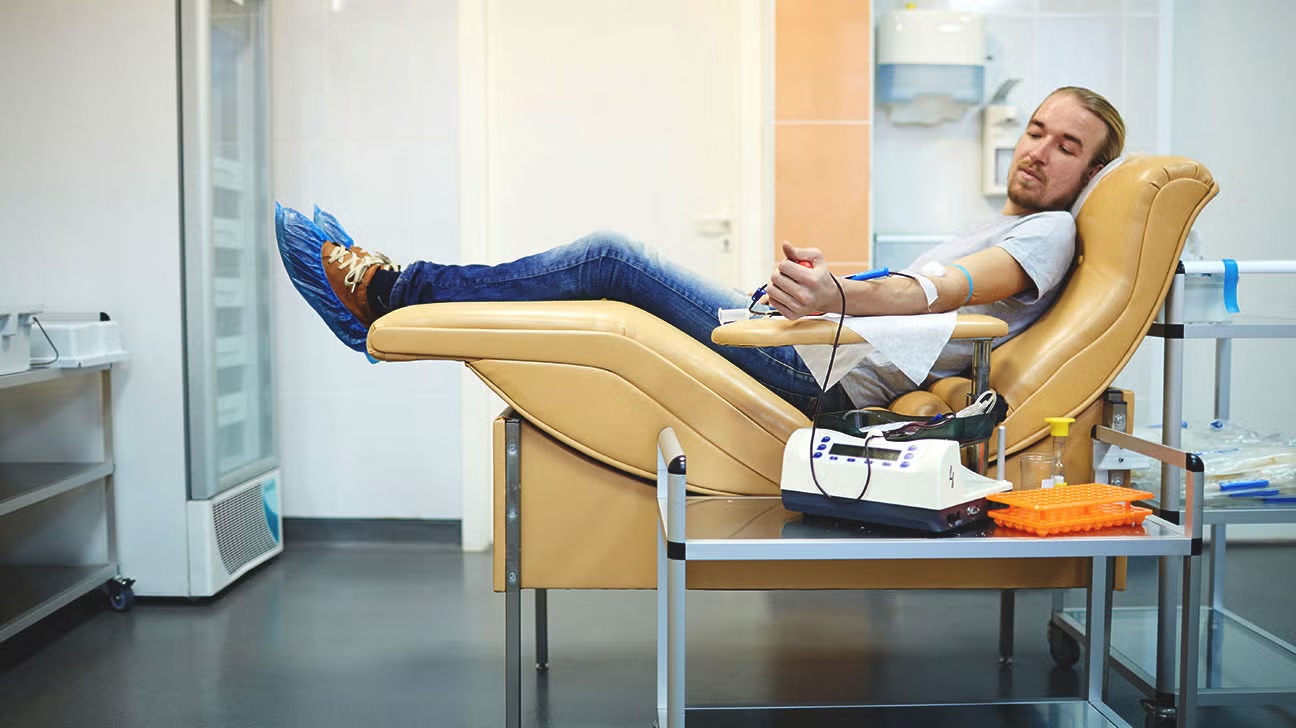
Once cleared, you move to the donation area. You sit in a comfortable reclining chair while the machine does most of the work. The staff places a needle in your arm, and the plasmapheresis process begins.
The actual donation usually takes about an hour, sometimes a bit longer for first timers. Many people use the time to read, watch videos, or just relax. When you are finished, you get a bandage, some fluids or snacks, and you are free to go about your day.
Tips to make your first visit easier
A little preparation goes a long way. Drink plenty of water the day before and the day of your appointment. Good hydration helps your veins and can make the process smoother.
Eat a balanced meal with protein beforehand. Skipping food can leave you feeling lightheaded. Comfortable clothing with sleeves that roll up easily also helps.
Afterward, avoid heavy lifting or intense exercise for the rest of the day. Most people feel fine, but giving your body a short break is always smart. Think of it as basic self care after doing something generous.
Finding a Donation Center Near You
Once you decide to donate, the next step is finding a convenient location. Many communities have dedicated plasma centers that specialize in this process. They often offer flexible hours to fit around work and family schedules.
A quick online search is usually enough to identify nearby options. Look for reviews, hours of operation, and information about appointment scheduling. Some centers accept walk-ins, while others encourage booking ahead.
If you are researching something specific, such as how to donate plasma in Calexico, you might find local centers that explain their process and eligibility guidelines in detail. Checking those resources ahead of time can make your first visit feel less stressful. The more you know, the easier it is to show up with confidence.
Convenience matters more than you think. A center that is close to home or work makes it easier to donate regularly. When the process fits naturally into your routine, you are more likely to stick with it.
Turning donation into a regular habit
Many experienced donors treat plasma donation like any other recurring errand. They schedule it after work once a week or stop by on a weekend morning. Making it predictable helps it feel less like a big decision each time.
Regular donations also mean you become familiar with the staff and the space. That familiarity reduces anxiety and speeds up each visit. Over time, the entire process feels almost automatic.
The impact of consistency is huge. Instead of helping once or twice a year, you might contribute dozens of times. That steady support can translate into real stability for patients who depend on plasma therapies.
Why Your Donation Has a Bigger Impact Than You Think
It is easy to underestimate the value of one donation. After all, it is just an hour or two out of your week. Yet when multiplied across thousands of donors, those hours become a lifeline for countless patients.
Each unit of plasma can be used to create multiple treatments. That means one visit may help more than one person. It is a quiet ripple effect that spreads far beyond the walls of the donation center.
There is also something meaningful about participating in healthcare in such a direct way. You are not just writing a check or clicking a button. You are physically contributing something your body naturally produces.
For many donors, that connection feels personal. They leave knowing they did something tangible, something that might help a stranger breathe easier, heal faster, or simply get through another day. That sense of purpose is hard to match.
Plasma donation is not complicated or dramatic. It is simple, steady, and human. And sometimes, those small, steady actions are exactly what make the biggest difference.
Comments are closed.